

Skin Booster Selection Guide | 5 Factors for Aesthetic Clinics
As the global aesthetic market continues to expand, skin boosters have become one of the fastest-growing treatment categories. Today’s aesthetic procedures increasingly focus on improving hydration, skin quality, elasticity, and long-term skin health rather than simply restoring facial volume.
At the same time, the number of available skin booster products has grown rapidly. From Hyaluronic Acid (HA) and PDRN to Exosomes, PLLA, and ECM-based formulations, each technology offers different mechanisms of action and clinical applications.
Selecting the right product has therefore become more complex than simply choosing a well-known brand.
Professional aesthetic clinics evaluate products based on scientific formulation, treatment objectives, clinical practicality, manufacturing quality, and real-world experience before incorporating them into their treatment portfolio.
This guide introduces five essential factors that can help clinics and distributors make more informed decisions when evaluating professional skin booster products.
This guide outlines five essential factors that can help aesthetic professionals make more informed decisions when evaluating skin booster products.
How to Use This Guide
Every clinic has its own treatment philosophy, patient demographics, and aesthetic goals. There is no single skin booster suitable for every indication.
Instead of searching for the “best” product, experienced practitioners evaluate multiple factors before selecting the formulation that best matches each patient’s needs.
The following five factors provide a practical framework that many professional aesthetic clinics use when evaluating skin booster products.
Factor 1. Evaluate the Formulation Technology
Understand Different Skin Booster Technologies

Although many injectable products are categorized as skin boosters, they are not designed to work in the same way. The formulation technology determines how a product behaves after injection, how long it remains active within the tissue, and what biological responses it is intended to support.
Rather than comparing brands, experienced practitioners first evaluate the formulation itself.
Some technologies primarily improve hydration, while others are designed to stimulate collagen production, support tissue regeneration, or improve overall skin quality.
Typical Product Examples
| Technology | Example Product |
| Hybrid Dual HA | INHILO |
| PDRN + NAD+ | NA:DRN |
| Exosome-Based Formulation | EXOGEN |
| PLLA Collagen Stimulation | PLLACELL / PLANITI |
Each technology offers different clinical advantages depending on the patient’s condition and treatment goals.
Selection Tip
Understanding formulation technology should always be the first step before comparing product brands.
Factor 2. Define the Treatment Objective
Identify the Patient’s Clinical Goal

Experienced practitioners rarely ask, “Which skin booster is the best?”
Instead, they first ask, “What is the patient’s primary treatment goal?”
Every patient presents different concerns, including dehydration, reduced elasticity, dull complexion, early signs of aging, acne scarring, or compromised skin barrier function.
Because different formulations are developed with different clinical purposes in mind, selecting the appropriate product begins with identifying the desired treatment outcome.
Typical Product Examples
| Treatment Objective | Example Product |
| Hydration & Improve saggy skin | INHILO |
| Skin Regeneration | NA:DRN |
| Cellular Communication & Regeneration | EXOGEN |
| Collagen Stimulation | PLLACELL |
Matching the formulation to the clinical objective helps practitioners deliver more predictable and personalized treatment plans while improving patient satisfaction.
Selection Tip
The most appropriate skin booster is the one that best matches the patient’s treatment goals—not necessarily the newest product on the market.
Factor 3. Review the Injection Protocol
Practical Considerations During Treatment
Selecting a skin booster involves more than evaluating ingredients.
Professional clinics also consider how a product performs during treatment.
Important considerations include:
- – Recommended injection depth
- – Injection technique
- – Product spreadability
- – Ease of handling
- – Patient comfort
- – Downtime
- – Recommended treatment intervals
Products with standardized protocols generally provide greater consistency across different practitioners while reducing treatment variability.
Ease of handling is another practical consideration. Products with predictable injectability and consistent flow characteristics often contribute to smoother procedures and improved workflow efficiency in busy clinical settings.
Example
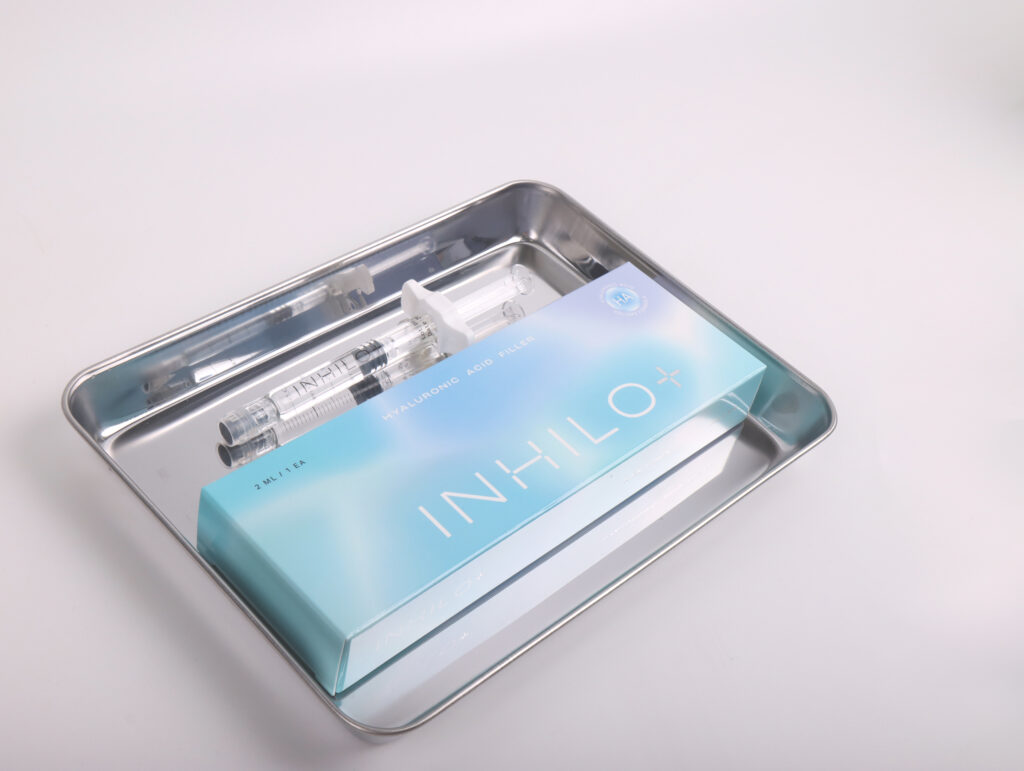
The ongoing INHILO Clinical Evaluation follows a standardized mid-to-deep dermis micro-bolus injection protocol, allowing objective assessment under consistent treatment conditions.
Selection Tip
A well-designed formulation should always be supported by a clear, reproducible, and clinically practical treatment protocol.
Factor 4. Assess Product Consistency & Manufacturing Quality
Reliable Products Build Long-Term Confidence

Consistency is a key consideration for clinics performing repeated aesthetic treatments.
Medical professionals expect products to deliver predictable performance across different batches and treatment sessions.
When evaluating manufacturers, clinics often consider:
- – Formulation consistency
- – Manufacturing quality
- – Sterility standards
- – Raw material quality
- – Product stability
- – Reliable product supply
- – Technical support and educational resources
Rather than focusing on a single specification, many clinics prefer working with manufacturers capable of providing a broad portfolio of formulation technologies that support different treatment strategies.
Example
Manufacturers offering multiple technologies—including Hybrid HA, PDRN, Exosomes, PLLA, and other regenerative formulations—allow clinics to tailor treatments to a wider range of patient needs.
Selection Tip
Long-term partnerships are often built on consistent product quality, reliable supply, and continuous professional support.
Factor 5. Consider Clinical Experience & Patient Satisfaction
Real-World Experience Supports Better Decisions

Scientific publications provide valuable evidence, but daily clinical experience remains equally important.
Professional clinics continuously evaluate:
- – Physician experience
- – Ease of treatment
- – Recovery process
- – Patient comfort
- – Treatment consistency
- – Long-term patient satisfaction
These observations help practitioners refine their treatment protocols and determine whether a product performs consistently under real-world clinical conditions.
Structured clinical evaluations and follow-up observations also provide valuable insights into product performance under real-world treatment conditions.
Example
BS PHARM KOREA is currently conducting an INHILO Clinical Evaluation to objectively observe treatment protocols, skin quality changes, and follow-up outcomes under standardized clinical conditions.
Selection Tip
Real-world clinical experience helps transform product knowledge into evidence-based treatment decisions.
Conclusion
Selecting the right skin booster involves much more than comparing product names or following market trends.
Professional aesthetic clinics evaluate products from multiple perspectives, including formulation technology, treatment objectives, injection protocols, manufacturing quality, and real-world clinical experience.
No single product is suitable for every patient. Instead, successful treatment planning depends on selecting formulations that best match each patient’s needs while maintaining consistent clinical performance.
By following these five evaluation factors, practitioners can build more predictable treatment strategies, improve patient satisfaction, and make more confident product selection decisions.
In our next article, we will take a deeper look at Formulation Technology and explore how different skin booster technologies influence treatment characteristics and clinical outcomes.
Need Help Selecting the Right Skin Booster?
Every clinic has different treatment philosophies, patient demographics, and clinical objectives.
Choosing the right skin booster often requires evaluating formulation technology, treatment goals, and practical treatment protocols together.
At BS PHARM KOREA, we offer a diverse portfolio of professional aesthetic solutions, including Hybrid HA, PDRN, Exosome, PLLA, ECM, and regenerative formulations to support a wide range of clinical applications.
Our team can help you with:
- – Product portfolio recommendations
- – Formulation comparison
- – OEM / ODM opportunities
- – Global distributor partnerships
- – Technical documentation
- – Product consultation
Looking for the right solution for your clinic or market?
Contact our team to discuss your professional aesthetic product needs.
Frequently Asked Questions
Q. What is the most important factor when choosing a skin booster?
- A. There is no single factor that determines the best product. Professional clinics typically evaluate formulation technology, treatment objectives, injection protocols, product consistency, and clinical experience together before making a decision.
Q. Are all skin boosters based on hyaluronic acid (HA)?
- A. No. Modern skin boosters include Hyaluronic Acid (HA), Hybrid HA, PDRN, Exosomes, PLLA, ECM, peptides, and other regenerative formulations, each designed for different clinical objectives.
Q. Why is formulation technology important?
- A. Different formulations behave differently after injection. The formulation influences hydration, collagen stimulation, tissue regeneration, longevity, and overall skin quality improvement.
Q. Can one skin booster treat every patient?
- A. Not necessarily. Every patient has different concerns and treatment goals. Selecting a formulation that matches the patient’s clinical needs generally leads to more predictable outcomes.
Q. What role does clinical experience play in product selection?
- A. Clinical experience complements scientific evidence by providing practical insights into treatment consistency, patient satisfaction, recovery, and long-term performance under everyday clinical conditions.


